

A recessed slab is a type of floor construction used in wet areas such as bathrooms, kitchens, and WCs, through which all pipework and service installations are routed.
Advantages and Disadvantages of Recessed Slab Construction
- As the service pipes are contained within the slab, sound insulation is improved.
- If a fault occurs, accessing the pipework for repairs is difficult.
- The construction requires additional stub beams to be added to the building, which increases the quantity of steel reinforcement and concrete required.
- The additional load increases the level of risk to the structure during a seismic event.
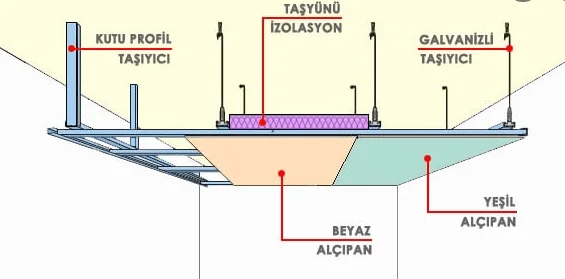
Although recessed slab construction was once widely used, the preferred approach today is to route all services below the floor level and conceal them behind a plasterboard ceiling. However, this method also has its own pitfalls. Since water pipes pass through these areas, any potential faults or leaks mean that the plasterboard used on the ceiling must be moisture-resistant green plasterboard, which is specifically designed to withstand damp conditions. Where a fault does occur, the plasterboard can be cut open, the repair carried out, and the panel replaced with relative ease.
Note: In public and institutional buildings, suspended ceilings must be constructed using aluminium grid systems rather than standard metal ones. Standard metal components are susceptible to rust if exposed to water ingress, which can render the entire suspended ceiling unusable.